Smoke saunas, barrels and banyas, plus what aspen, cedar and alder actually do to the feel of a room.
Saunas are old. Properly old. The Finnish version goes back thousands of years and started as a pit dug into a bank with a pile of stones heated by fire, which doubled as the warmest and cleanest building anyone had. Babies were born in them and the dead were washed in them, and for most of that history it was the most important room a family owned.
Everything since has been a variation on heating a pile of rocks.
The savusauna, or smoke sauna
The original design and still the one purists chase. There is no chimney. You light a fire under a large mass of stones and let it burn for four to eight hours. The smoke fills the room, blackens the walls and does a decent job of sterilising everything.
Then you let the fire die, air the smoke out, wipe the benches, and go in. The heat that comes out of a tonne of hot rock is softer and heavier than anything a metal stove produces, and the whole room smells of woodsmoke without being smoky.
Finland nearly lost these. There were a few hundred left by the middle of the last century, and they have come back as a deliberate revival. If you ever get the chance to sit in one, cancel whatever else you were doing.
The chimney stove
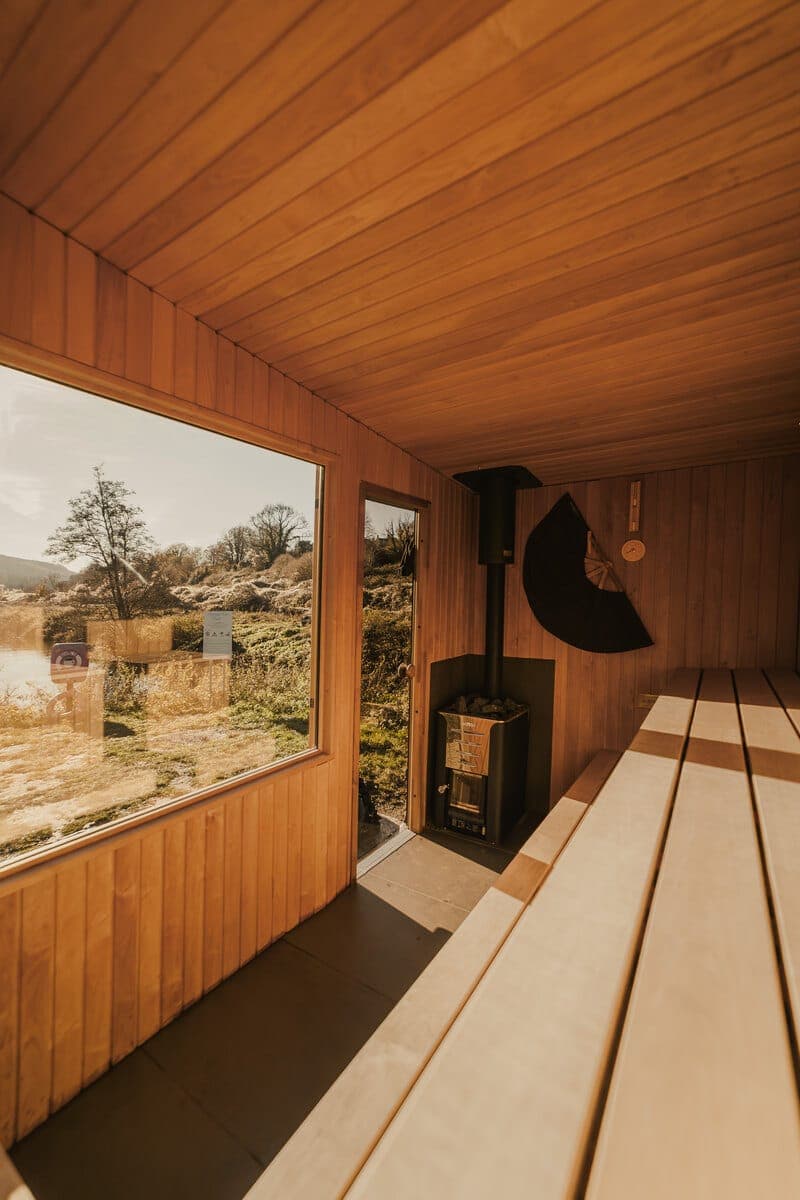
The practical evolution. A metal firebox with stones on top and a flue through the roof, so the room can be used within an hour rather than most of a day. This is what nearly every wood-fired sauna in Bristol is.
You get a faster, drier heat with a sharper edge to it, and much better control. Feed the fire and the temperature climbs.
Electric
Arrived properly in the 1950s and made saunas possible in flats, gyms and hotel basements. An element heats a smaller pile of stones, a thermostat holds the temperature, and it runs all day without anyone tending it.
The trade-off is the mass of stone. Less rock means the löyly is thinner and it recovers more slowly after a big pour. Modern commercial units have closed most of that gap, and two of the best-regarded community saunas in Bristol are electric, which settles the argument reasonably well.
Banya, hammam, sweat lodge
Worth knowing these are separate traditions and not regional words for the same thing.
The Russian banya is cooler and much wetter, built around rounds with birch whisks and cold plunges between. The Turkish hammam is a wet marble bathhouse with a scrubbing and washing ritual at the centre of it. Native American sweat lodges are a ceremonial practice rather than a leisure one, and are not something to borrow the aesthetics of casually.
Build styles you will see around Bristol
Barrel saunas are the round ones that look like a cask on its side. Popular because the curved roof means less air volume to heat, so they get hot fast, and they arrive on a lorry pre-built. Orchard Sauna and several others use them.
Cabins and huts, square built, more headroom, room for proper tiered benches. Slower to heat, better for a long session with a crowd.
Converted things. Bristol has a strong showing here. Bristol Sauna Yard built theirs into a horsebox. Skuna put one on a boat on the harbour. West Country Water Park floats one on a lake.
Mobile trailer saunas, which turn up at festivals, lakes and fields and are why a third of this list is out in a field somewhere.
The wood, and why it matters
This is the part people do not expect to notice and then do.
Aspen is the standard Finnish bench timber. Pale, almost no smell, very low resin, and it does not splinter. It also stays noticeably cooler to sit on than you would expect, which matters a lot when you are bare skinned on a bench at 90°C.
Alder is reddish brown, soft, with a mild sweet smell. A favourite for benches in the Baltics.
Thermally treated aspen or spruce has been baked to stabilise it. It goes a deep chocolate brown, moves less with humidity, and conducts heat poorly, so it is comfortable on skin. Most of the darker, smarter looking modern interiors are this.
Western red cedar is the aromatic one, and what most barrel saunas are built from. Strong, sweet, resinous smell that hits you the moment you open the door, and naturally rot resistant, which is why it does well outdoors in a damp British field.
Spruce and pine are cheap, smell like a forest, and can weep sap when hot. Fine for walls, less pleasant as a bench.
Hemlock is nearly odourless. Genuinely useful if strong smells give you a headache or you are sensitive to cedar.
Obeche and abachi, African hardwoods, conduct heat so poorly that the bench feels almost neutral to sit on. Used in high-end builds and in the hottest rooms.
Sit in a cedar barrel and a thermo-aspen cabin back to back and the difference is obvious immediately. One is a smell you walk into, the other is a room that feels soft to touch and lets the heat do the talking.
Why any of this matters when you are choosing where to go
Mostly it does not. Go somewhere near you, at a price you like, and see if you enjoy it.
But once you are going regularly you will find you have a preference, and it usually turns out to be about the room rather than the temperature. People who love Briery Wood or Unfold are generally describing the smell and the quiet, not the thermostat.
Find a sauna near you
29 venues in and around Bristol, mapped with prices and booking links.
Browse the map